SEO beginner’s guide

What is SEO?

SEO stands for Search Engine Optimization. SEO is the process of improving your website to score higher positions in Google.

By optimizing your technology, content, and authority, you rank higher in search engines like Google, Bing, and YouTube. This better visibility generates more organic traffic for you.

So you don’t have ads running like with SEA (Google Ads). Moreover, search engines reward you for things like user-friendliness and reliability (EEAT), factors that your online visitors also greatly appreciate.

Discover immediately if SEO is right for you, how it works for your business, and where you currently stand.

Or read on for a practical explanation of higher rankings in search engines.

What is SEO (Digital Climax Book)

Axl wrote a book about SEO and often shares his knowledge in podcasts, webinars, training courses & here on this page

All my SEO knowledge & experience in this beginner’s guide

“SEO can be complex, we understand that all too well. 8 years ago, Axl started building websites. In the meantime, his fascination for search engines grew.

Thanks to his technical background as a developer, he understands which factors need to be in order to satisfy search engines. Everything rests on technology, content, and authority. We have tested the practical implementation over the past few years.

Today, a team of experts is ready at Digital Climax. We share all our knowledge and experience in this guide. This way, you can get started yourself. And as a true SEO nerd, Axl is happy to help you with all (small) questions, no strings attached.”

The 3 pillars of Search Engine Optimization

200 ranking factors? Is it even possible to take all of those into account? Absolutely not. Especially when you know that some of them are as secret as the recipe for Coca-Cola.

In this SEO manual, we give you the tools & factors to rank higher in search engines.

Fortunately, Google itself reveals quite a bit in the Google Search Essentials. It turns out that SEO factors can be traced back to 3 pillars that withstand all updates.

So let’s start at the beginning. The 3 pillars of SEO that form the absolute basis of search engine optimization.

Technology

The technical operation of websites has undergone a strong evolution over the years. Just think of the rise of mobile devices. For several years now, a website must be responsive to satisfy searchers (and therefore Google).

A technically sound website indicates reliability and quality. Essential as a first step in your SEO journey. Get started with the tutorials in the box below.

Content

High-quality content is the foundation of a search engine. After all, the mission of a search engine is to help the searcher find the right information.

So focus on relevant search terms for the best result. But writing SEO texts: how do you start? And is there such a thing as image SEO? (spoiler alert: yes, there is)

An SEO tip: work with content clusters.

Authority

Often considered the most difficult step of search engine optimization. We build authority through linkbuilding.

Google prefers this to happen naturally. A good website with high-quality content naturally attracts backlinks.

On-page vs Off-page SEO

On-page and Off-page SEO are 2 popular terms. Besides the 3 SEO pillars, you also have these types. On-page SEO includes everything on your page. Specifically, technology and content fall under this. You have full control over these factors.

Off-page SEO includes the authority pillar. This is what you build outside of your website. You don’t have full control over these signals since you have to convince other websites to link to you, for example.

AI optimization: the new component of SEO

2026 is all about AIO (AI optimization), also known as GEO. This new term falls under SEO.

AI tools are the new search engines. Depending on the type of search query, people use classic search engines like Google, Bing, … or turn to newer answer engines like ChatGPT, Gemini, Deepseek, …

Digital Climax is proud to launch AIO.

AIO is the newest part of SEO

A new twist on classic SEO

Due to all these changes, we see SEO evolving into “Search Everywhere Optimization”. You haven’t been optimizing just for Google for a while now, but also for Bing, YouTube, TikTok, … and for several years now also for AI search engines like ChatGPT, Gemini, Claude, …

Being found in AI means that many voices in the SEO community are moving towards a new interpretation of an age-old term.

SEO is not dead; it is evolving rapidly. On our site, you stay up-to-date on all evolutions, methods, and research regarding search engines.

5 Decisive ranking factors in 2026

Over the past few years, we have seen many cases and challenges. From our experience, these 5 factors prove to be the most decisive for your online visibility.

1) Keywords & architecture

You build your website architecture based on keyword research. Take a step back and map out your structure. Think carefully about which pages you want to create, process them, and place them in the right spot on your site.

2) Internal links & anchor texts

An internal link directs visitors and search engines to related content in relevant places. The anchor text ensures you know where you’ll end up when you click.

Internal links are the way to make your architecture clear to search engines

3) Keywords in the right place

Keywords remain a guideline in search engine optimization. Place them in the right spots: Page title, H1, subheadings, and naturally within the text.

Also think about synonyms. Using synonyms helps you enormously to attract more organic visitors.

4) High-quality content

High-quality content helps your visitor move forward (helpful content). Google’s systems have become incredibly strong at recognizing this type of content.

When writing, it’s best to focus on your customer and ignore search engines. Make sure you create added value.

5) Backlinks

Originally, backlinks (external links) were the foundation of the algorithm. Today, they are less important than in the early years. Yet they still play a crucial role in helping your website rank higher. During your linkbuilding, focus on quality and relevance (the linking website should be about the same topic as yours).

5 decisive SEO factors

Attention

These factors are only interesting if your website is technically fully optimized. Technology is and remains the foundation of SEO. That’s why an SEO audit and technical optimization are always the first steps we take.

Important SEO components in 2026

AI Optimization for Content

Structure content specifically for conversational AI and intelligent answer engines by:

  • Schema markup implementation for clear data communication
  • Natural language patterns that improve AI interpretation
  • FAQ structures that provide direct answers to frequently asked questions

Voice Search Optimization

With 30% of all searches now performed via voice, we optimize for:

  • Conversational keywords and sentence structures
  • Local searches
  • Question-and-answer formats that dominate voice search results

Receive a concrete SEO step-by-step plan

Starting with SEO can be overwhelming. Been there, done that. We love sharing our knowledge; you can discover a large part of it here and in our book.

During an SEO scan, we zoom in on how SEO can work for your business:

  • Concrete tips
  • Tailored advice
  • Current positions, keywords & authority
  • SEO priorities & next steps

This is what you receive from us during an SEO scan.

SEO: Search Engine Optimization step-by-step plan

Our SEO results

Discover concrete cases in our portfolio about how we have helped companies grow sustainably with SEO.

SEO podcast

Axl was a guest on the “Over marketing gesproken” podcast for an explanation of SEO. You’ll discover the world of search engines in a simple way, with fun anecdotes and clear comparisons.

Watch our SEO webinar again

In our webinar, we take you through the world of SEO. Discover the decisive factors, learn practical tips, and receive tools to get started yourself.

Still have a question? We love to link our experience to your question. Feel free to send us an email and we’ll be happy to help you on your way. Or request an SEO scan.

SEO book

We bundled all our knowledge into 1 handy book to take with you. This way, you stay up-to-date on SEO whenever you want. The ideal holiday read for anyone who wants to rank higher.

124 pages full of knowledge
Practical tips & tricks
Get started with search engine optimization yourself

Discover the SEO book by Digital Climax

About Digital Climax

Digital Climax is an SEO agency based in Lille, in the Antwerp Kempen. Looking for a partner for SEO in the Kempen or SEO in Antwerp? We have been optimizing websites, creating content, and increasing the online authority of companies and organizations since 2018.

By going all out for the highest positions in our search results, you get more traffic, more leads, and more customers.

The result? Higher revenue. Read more about Digital Climax and discover which profiles work with us and what types of SEO support we can offer you.

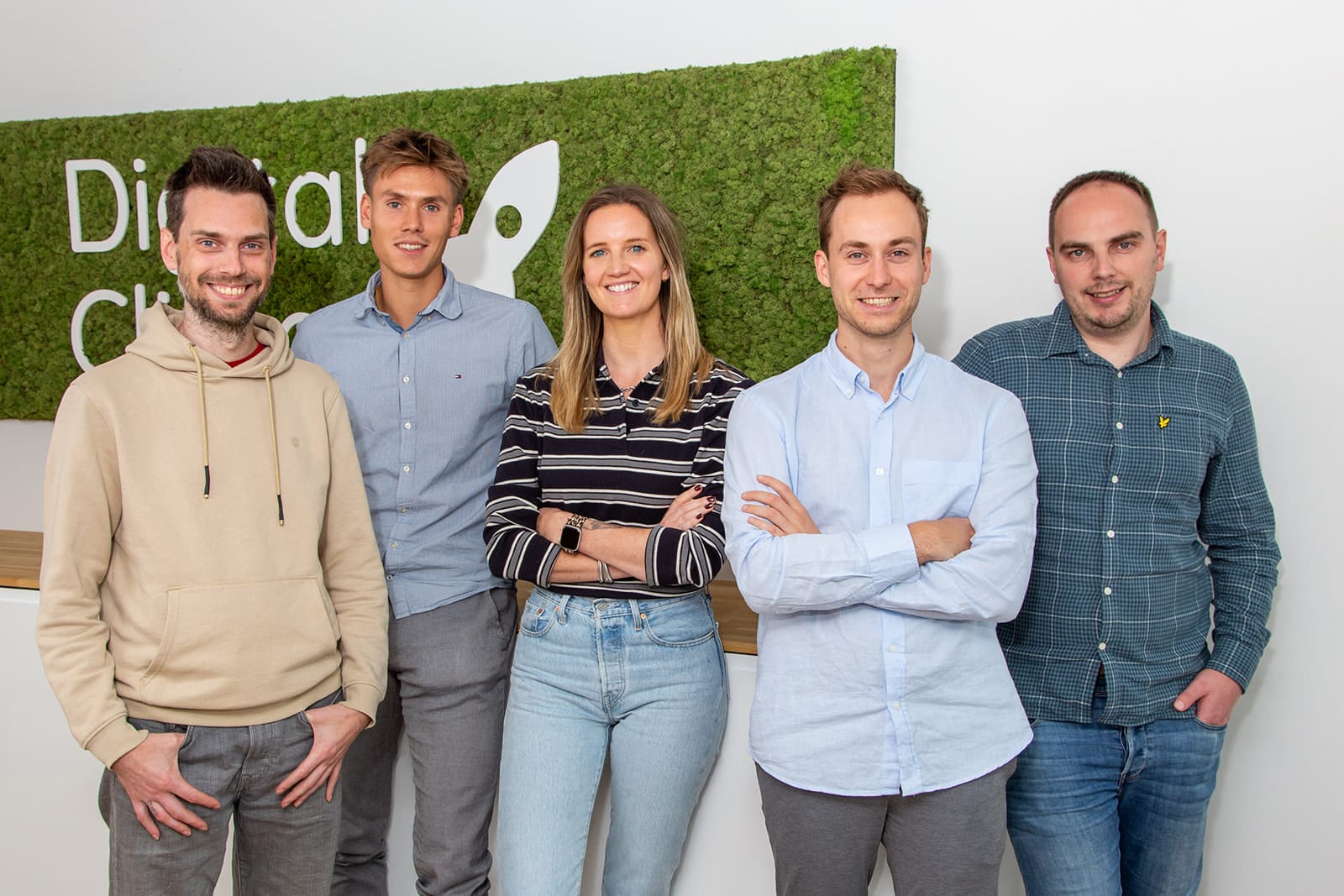
Team of SEO specialists from Digital Climax

SEO in practice (white papers)

All our knowledge bundled into white papers. We go into the smallest details and show you exactly how you can rank higher in Google. Because SEO simply requires in-depth knowledge. Search engines expect you to check off all the parameters.

How do search engines work?

Actually, you should ask how Google works.

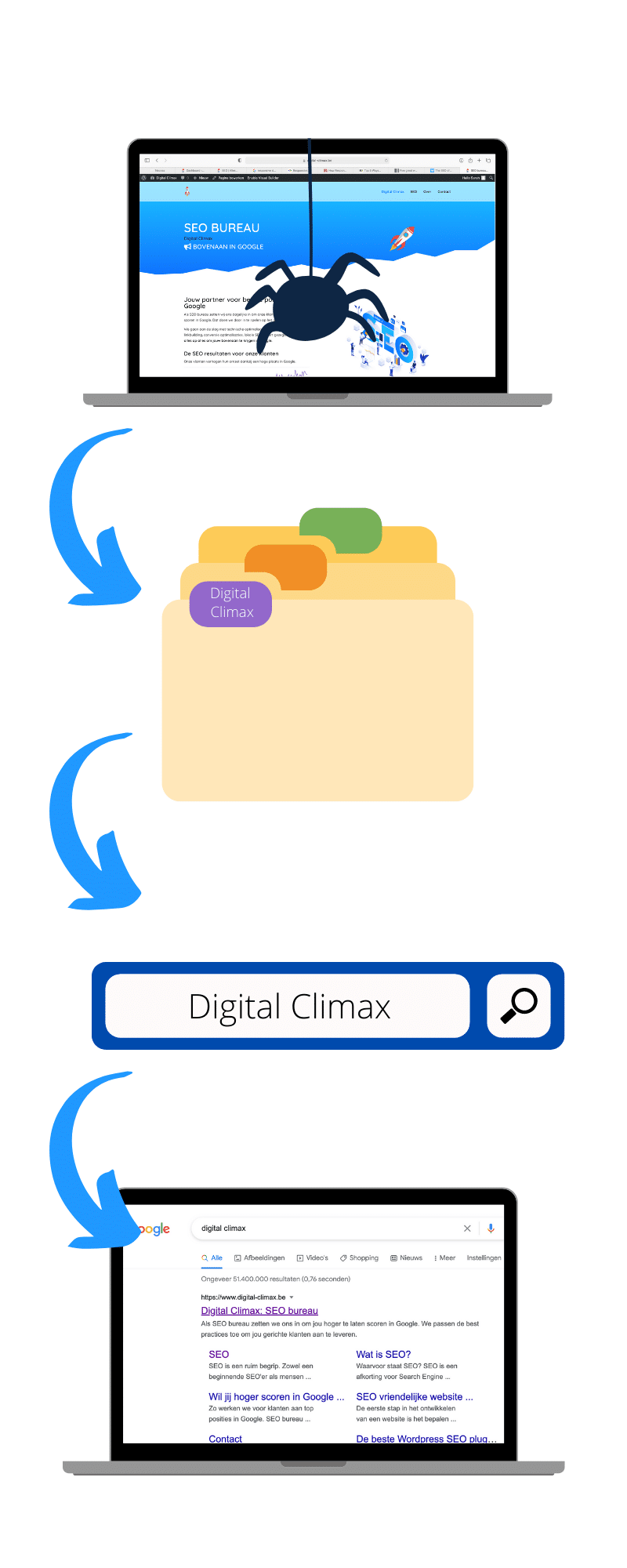
1) Crawling

Before your website can even appear, search engines must crawl through your website. Online search engines send out crawlers, also called robots or spiders, to index your website. They try to understand and map it out.

2) Indexing

After crawling, your website can be included in the index. Compare it to listing your business in the phone book. The hard truth: not every website makes the cut. The fact that your page was crawled is no guarantee of effective indexing.

3) Ranking

Based on the image Google gets, it decides how high or low the website appears when someone enters a search query. The goal is always to give the user the best possible result. That match is determined based on more than 200 SEO factors.

4) Adjusting

You track your results with Google Search Console & Ahrefs. From there, you optimize further to help your visitors even better. You incorporate synonyms, extra questions, and content that provides value.

Operation of Search Engine Optimization

The goal of SEO

With SEO, you want to be found in search engines in an organic way. You set up your website so that search engines naturally show it at the top of the SERP. Whether that’s voice search, AI search engines like ChatGPT, Perplexity, Grok, … or classic search engines like Google, Bing, …

People look for answers to questions. With SEO, you reach more people, attract more leads, and ensure more revenue.

Ultimately, search engines want the best results for their users. Optimizing for search engines therefore means optimizing for your website visitor.

With search engine optimization, you ensure long-term growth. The ideal addition to your short-term marketing campaigns & actions.

Practical SEO tasks

Working on SEO requires continuous follow-up. No one-time tricks or shortcuts. Instead, a focus on long-term quality.

Here we list concrete tasks & actions to make your website rank higher.

  • Technical optimization: Technology is always step 1 in an SEO journey. Without technology, your website is not (easily) crawlable or indexable.
  • Competitor analysis: look at your competitors’ websites and learn what they have done in the past to rank. From there, you set up your strategy.
  • Keyword research: map out relevant keywords & map them to the most relevant page.
  • Next steps: open Ahrefs & Google Search Console and look for new opportunities & points for improvement.
  • Content: write new content; no, it doesn’t always have to be blogs. SEO is broader than purely informative keywords. Ensure relevant keywords are present on your website.
  • Technical follow-up: schedule regular technical checks; we follow this up weekly ourselves. Your website is in motion, and we see in practice that errors can sometimes occur.
  • Linkbuilding: continue building your authority. Look for mentions on related websites that have already built up some authority themselves.
  • Test metadata: your page title & meta description have a huge impact as soon as you are in the top 10. They convince searchers to click on your result.
  • Improve your content: as soon as you write content, you should also update and improve old content. This way, you rank higher step by step.

Frequency

Depending on your speed, you take on the above monthly or weekly. In some organizations, even daily follow-up is possible.

Importance of SEO

Why is SEO marketing important?

The perfect route, the dream Christmas gift, a solution for the leak in the bathroom… Whoever needs something, searches online.

Just think about it. How many times have you searched for something in Google today? And which result did you click on? A guess: the first or the second. Research shows that they have a 50% chance of being clicked. Yes: as much as all the search results after them combined.

Higher positions in the organic search results therefore yield more traffic for you. That means more visitors you can convince of your product or service. And unlike SEA, you don’t have to pay per click.

Discover 7 more benefits of SEO.

Google’s mission

You can read Google’s mission here. Specifically, Google is constantly working on a better internet. Delivering the right information to their customers (aka searchers).

As soon as you leave black-hat SEO behind and focus on the right steps, you don’t have to worry about algorithm updates.

So you are forced to focus on what your customers are looking for and to deliver that in a high-quality way.

That’s exactly why SEO is the foundation of marketing for us.

The SEO process

SEO aims for the long term, so it’s a process that will keep you busy for a while. We always implement search engine optimization in 3 phases:

  1. SEO startup: Who is the company? Where do you want to go? How are we going to get there? Specifically, this translates into keyword research, competitor analysis, baseline measurement, … We bring all that data together to set up a strategy.
  2. Technical audit & optimization: in phase 2, we fully audit the website, uncover problems, and solve them. This way, we build a technically high-performing foundation to work from.
  3. Content & authority: Once the foundation is laid, you work recurrently to attract high-quality content and relevant backlinks. This way, you work step by step on a website or shop that ranks in the search results. We call this the SEO loop.

Our SEO process is therefore based on the 3 pillars. We also see the 3 pillars as chronologically executable: first technology, then content, and only then authority. After all, there’s little point in placing content on a website with technical errors, and links to low-quality content bring little added value.

So start at the beginning, set your sights on the long term, and focus on quality. That’s the best advice we can give you for SEO success. Advice that we put into practice daily.

SEO process

The basic principles of search engine optimization

Technology, content, and authority are not just the 3 basic pillars of search engine optimization. They also form the basis for your SEO strategy. Just quickly write some blogs and hope you end up at the top of the organic search results?

The chance of you succeeding at that is very small.

It’s a better idea to focus on a logical order, on quality, and on the long term.

First, you get your website technically right, then you create high-quality content, and then you strengthen your link profile.

In doing so, you always keep essential matters like the search intent of your target audience and the user-friendliness of your website in mind.

Such a mapped-out strategy obviously takes time. So keep in mind that Search Engine Optimization usually only yields business results after several months.

EEAT, a solid foundation for your SEO

Crawlers collect all online content. The algorithm is responsible for ranking the search results when someone enters a search query. With small adjustments every day and a major Core Update every few months, that algorithm is regularly changed. Whether the search results still provide the best answer to the search queries is evaluated by Search Quality Raters. They base their evaluation on four important parameters:

  • Experience: Google values first-hand experiences, for example with a portfolio.
  • Expertise: use jargon and explain it, and regularly publish helpful content about your specialty.
  • Authoritativeness (Reputation): what do others say about you and can you back up the claims you make?
  • Trustworthiness: the combination of the previous three and a little bit more, for example, an SSL certificate.

Important to remember: EEAT is therefore not a direct ranking factor. However, meeting these four conditions increases the chance that you will score high in the search results.

The role of SEO in marketing

With search engine optimization, you optimize pages. If you do that well, your pages will score now and in the coming years. It is therefore the ideal long-term strategy.

Yet marketing is broader than that. You also want to achieve short-term results. So ensure a good mix of short-term (e.g., ads) and long-term strategies (e.g., organic content on your website or social media).

When it comes to SEO, think carefully about your SEE-THINK-DO framework. Start with your DO keywords. They yield results the fastest since the search intent is very commercial.

SEO & SEA (Search Engine Advertising)

SEO and SEA go hand in hand. Every search query shows ads above, below, and nowadays also between the organic results. With SEA, you advertise in Google. You pay for this per click on your ads. That is also the biggest difference with SEO, where you don’t pay per click.

You set up a SEA campaign in Google Ads. Unlike SEO, you generate results almost immediately. That’s why we view SEA as a short-term strategy.

SEO and SEA complement each other perfectly. For example, you learn from SEA campaigns which keywords work for you. SEO optimizations then ensure that your SEA clicks become cheaper.

Both terms fall under SEM (Search Engine Marketing)

Our advice:

Set up a SEA campaign to quickly learn what works. At the same time, get started with optimizations for your website. This way, your clicks become cheaper. An optimized website makes your ads in Google (and other channels) convert better.

So view your marketing as a whole. Our specialization is in SEO, we do nothing else, which means we can help you perfectly with this part. Just know that marketing goes broader than purely and only SEO.

Demand capturing with search engines

You have a question, you type that question into the search engine, the search engine gives an answer.

It’s that simple.

We all do that en masse today. The average person searches 3 – 4 times a day in a search engine.

With SEO, you ensure that you get to provide the answer.

So you are going to capture an existing question; we call that “demand capturing” in the marketing world.

The advantage is that people indicate themselves that there is a problem/need and you can simply provide the solution.

What is not possible with SEO is creating demand. You can only capture what people type in. An innovative product that no one knows will therefore likely have little to no benefit from high positions.

To score high, you need to prove to search engines that you know what you’re talking about, that your answer is the best one out there, and that you are reliable.

Skills needed for SEO

For SEO, you need to be able to do certain things. If you don’t have certain skills in-house, you can easily hire them.

We list them based on the 3 pillars within search engine optimization.

Technology

The technical pillar is mostly about code. HTML & CSS are welcome skills during SEO work. Certainly, the basics are required.

Understanding Javascript and PHP are additional programming languages that can be useful.

Content

Content is usually about text. However, don’t forget video & photos today. Explaining a (complex) subject with the right words to solve search queries.

Conducting interviews, writing to-the-point texts, and processing everything into a high-quality web page are indispensable.

Authority

Authority is mainly about networking. Which related websites do you know to collect backlinks from?

This is how you prove to search engines that others also find that there is something useful to read on your website.

Mindset

We would like to add the long-term mindset to that. Not everyone has it, but it’s essential to achieve success with Search Engine Optimization.

Results don’t come pouring in overnight, but in the long term, you get incredibly nice returns from SEO in terms of cost-benefit.

Step-by-step plan: How do you start with SEO?

Our approach

Now that you know what Google takes into account, you know what to focus on to rank high:

  • maintaining a technically correct website
  • adding high-quality content
  • building authority with backlinks

How do we tackle this concretely?

1) SEO analysis

The first step in every journey is an SEO analysis, audit, or baseline measurement. This way, we discover problems and errors (read: points for improvement and opportunities).

Also consider the following matters:

2) Optimizations & content

In consultation with your web developer, we tackle the technical matters. Afterwards, we optimize existing content and/or add new content. With SEO writing, you incorporate the necessary search terms into the texts on your website.

The basis for this is our keyword research. Do write for your target audience and not for Google. After all, keyword stuffing is also penalized.

3) Linkbuilding

Once our foundation is good, the content has been created and adjusted, and growth has started, it’s time to step it up a notch. Thanks to high-quality and relevant linkbuilding, our organic positions improve further.

4) Results & Reporting

You chose an external SEO agency because you’re not busy with search engine optimization day in, day out. That doesn’t mean, of course, that we just do whatever behind your back. We show our progress during monthly reports with answers to these questions.

  • What steps have we taken?
  • What results did they yield?
  • What are we currently running into?
  • What do we need from you?
  • Do you have any questions/feedback?

You don’t just outsource SEO to never look at it again. In a partnership, your input is important.

When do you start with SEO?

You can work on SEO continuously. Searching for and implementing optimizations and improvements is always possible. The ideal time to start with SEO is before the first line of code of your website is written.

Since not every company is on time, we often pick up on existing websites, resulting in extra costs.

When you decide to have a new website/webshop made, it’s best to bring in an SEO specialist to prepare this and guide the migration.

Why is it best to do it beforehand?

Before your website is built, you can map out a clear architecture based on your keywords and goals. This way, you have a clear view of what your website should do and what its structure should look like.

We notice that you see results from your SEO efforts faster when you focus on quality from step 1.

SEO with a focus on the long term

Search engines want to show quality. So you first have to prove yourself. Prove that you have something to say, that it is useful or high-quality content, and that others also confirm that you have something to say (you do that by collecting backlinks).

As soon as search engines see you as a high-quality source, they will show your website higher. Initially, this often happens very cautiously. If search engines receive confirmation from their customers (aka searchers) during that process, then you break through.

Admit it: how wasteful would it be to rank at the top with bad content that yields nothing.

Ultimately, marketing just has to pay off, right?

You cannot force this process, at least not if you want to get a return on it in the long term. So don’t let anyone tell you otherwise.

Aha, finally a miracle cure for more website traffic?

Unfortunately not. If that magic button existed, we would have pressed it for our own website. Our experience tells us that SEO is not a short-term strategy. Small adjustments do make big differences in the long term. For example, read these SEO tips to rank higher in Google.

Content marketing is an efficient strategy. But SEO remains primarily a long-term process. So be honest with yourself. Without the right SEO mindset, there’s no point in mapping out a detailed SEO strategy.

Search engine optimization visual

Keeping up with SEO

Everyone wants a beautiful body. Unfortunately, that requires a lot of hard work. Dragging yourself to the gym a few times a week, for example. Even worse: in the beginning, you barely see any progress. Your fitness does improve and you learn to know your body. But it takes so long before things actually change and you can barely skip a session. Yet it’s proven: those who persevere, win.

It’s the same with search engine optimization. In the beginning, your website improves technically and you get to know keywords and opportunities. Yet you stay around the same position. Only when you are consistently busy for 6 to 12 months (depending on your niche) do you see things change. There is no shortcut that suddenly makes you jump forward. In the long term, it yields more visitors, leads, and revenue.

Discover why SEO is a long-term strategy

White hat & black hat SEO do’s and don’ts

Do: start with SEO

Suffer from short-term memory? No problem, as long as you remember this one tip from this explanation: start with SEO! You learn it best in practice. Optimize and see what the effect is. This way, you grow step by step towards a more coherent whole.

Don’t: black hat SEO techniques

Where there are rules, there are cheaters. Some specialists like to “interpret” Google’s recommendations. Think of white text on a white background where you incorporate keywords. Such keyword stuffing provides absolutely no added value for your visitor. As soon as Google realizes you are using black hat SEO techniques, you lose rankings. So, it’s better not to do it.

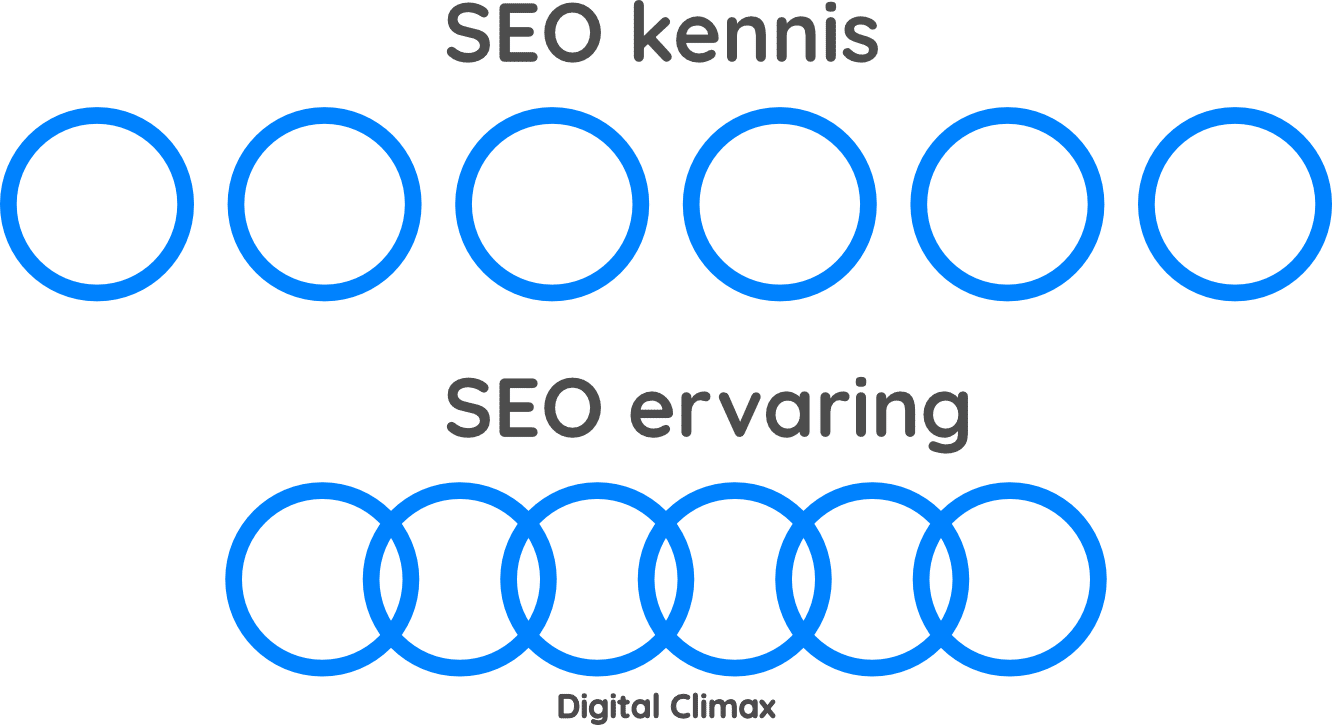
Search engine knowledge vs experience

Don’t: go in unprepared

Just starting out with SEO marketing? Then you’ll probably do more harm than good. It’s important to know where to start, what to look out for, and what to absolutely avoid. Without the right knowledge, it’s better not to start.

Fortunately, you’re in the right place. Here you’ll find everything to get started. Or you can always contact us as experts for your company.

Our vision: Go for a better website

We view search engine optimization as a synonym for making your website better. Start from the perspective of your ideal customer and optimize your website. Search engine ranking factors also focus on this.

Tip: Focus on quality & relevance. The common thread in these concepts is search intent.

In addition, conversion optimization ensures that more people get in touch from the same number of visitors.

Work on your online image both on your website and off your website (off-page SEO).

It would be a shame to put in so much effort to attract visitors only for them to close your website immediately, right?

The hidden Q in SEO

That’s exactly why, ideally, there should be a Q in SEO. The Q for quality. This forms the common thread in a sustainable strategy that reaches further than just search engine optimization alone.

Because you’ll dare to share high-quality content through various channels. And that’s how you extend all your SEO efforts into your entire online marketing story.

SEO tools

Handy tools that help you rank your website higher in Google. Search engine optimization quickly becomes quite technical. With the right SEO tools, you make better positions a lot more achievable.


Google Search Console

Discover our Google Search Console guide

Ahrefs

Discover our Ahrefs guide

Screaming Frog

Discover our Screaming Frog manual

Structured Data Generator
SERP Simulator

With our own SEO tools, you can easily generate structured data code and test your page title and meta description

Semrush
SE ranking
Ubersuggest

Discover our Ubersuggest guide

AnswerThePublic

Discover our AnswerThePublic guide

Detailed SEO Browser Extension

Discover our Detailed SEO extension guide

Pagespeed Insights

Do I need an SEO tool?

SEO tools help you collect data. Think of pages that are indexed (or not), interesting keywords, backlinks you can attract, …

SEO tools are therefore an important element in your journey; we certainly can’t do without them.

You do have to interpret the data yourself and apply the learnings correctly.

What does an SEO specialist do?

Working in SEO means focusing on improving websites and webshops. The primary goal is to rank higher in search engines. Depending on your knowledge, you focus on one of the three pillars (technical, content & authority). At Digital Climax, there is a team of experts, each with their own expertise.

SEO professions

Which experts work at Digital Climax? What exactly do they do? And how do you attract the right SEO profiles? We support you with advice and action.

Working in SEO? Discover our vacancies

SEO Services

Discover how you, together with us, can use SEO for better rankings in Google and more revenue. We work consistently on a better website with results.

Digital PR
SEO coaching
SEO education/training
White label SEO
Outsource SEO

Take an SEO course

Take an SEO course at Digital Climax? We love sharing our experience and tips with your marketing team. Depending on your needs, we zoom in on content, technical aspects, or authority during the training.

Sharing knowledge is an important pillar for us. That’s why we write everything out on our website, organize webinars, and visit companies with tailor-made SEO training.

Understanding SEO jargon

Crawlers, SEO factors, linkbuilding, black hat techniques, canonicals… You’ve already encountered quite a few technical terms in this article. Yet you’re guaranteed to come across even more. Especially when you optimize your website technically.

Then you’d better know what’s being talked about. So avoid getting lost and go through our handy overview with all SEO terms, from A(lt tags) to Z(oekwoorddichtheid). Never be at a loss for words again!

Still hungry for more SEO?

You never stop learning about SEO. The Google algorithm changes every day (check Google updates: algorithm changes until 2026 to stay up-to-date) and the competition isn’t sitting still either. So it’s important to stay informed about all changes, evolutions, and new techniques. With the material below, you can further improve your knowledge.

SEO news & trends

SEO and AIO Lunch & Learn

SEO and AIO Lunch & Learn

Join Jong Voka Kempen for a lunch & learn session on SEO & AI. Address Colonie 7Kapelstraat 102310 Merksplas When Tuesday, June 23, 2026, at 12:00 p.m. Registration: https://www.voka.be/mechelen-kempen/activiteiten/jong-voka-kempen-lunch-learn What will be covered:...

The history of search engine optimization

Google was founded on September 4, 1998. Since then, they have grown rapidly with their revolutionary algorithm. Over the years, that algorithm has been continuously adjusted. SEO specialists all over the world started working on optimizations, and some also applied black-hat techniques. This forces the search engine to continuously improve itself.

What did stay consistent? The company’s mission: they want to organize all the information in the world and make it universally accessible and useful. From that starting point, we recommend everyone to build and improve their website. Then you’re always on the right track.

In the last year, there has been more focus on quality and relevance with terms like EEAT, helpful content, and SPAM updates. The rise of AI also presents an extra challenge for search engines. We are certainly curious about which updates Google (and other search engines) will launch this year.

There have been many corrections in recent months, a trend we also expect in the coming year.

Fun fact
Google has been celebrating its birthday on September 27 in recent years (instead of the founding date of September 4). Quite coincidentally, also Axl’s birthday. Coincidence? Or destined for a career in SEO?

Interesting SEO articles

You should definitely read these external articles. They give you extra insights into SEO and provide you with immediately applicable tips & tricks.

SEO for beginners (English)
Presentations from Brighton SEO (English)
Learning SEO (English)
SEO hub (English)
SEO guide from Hubspot (English)
What is SEO? – SEMrush (English)
Search engine optimization according to Wikipedia

How much does search engine optimization cost?

SEO falls under the marketing budget. Like everything in marketing, you can go as hard and as crazy as you want.

So there is no fixed price for a project. Many companies work with packages. That’s good, but the duration of the project is variable.

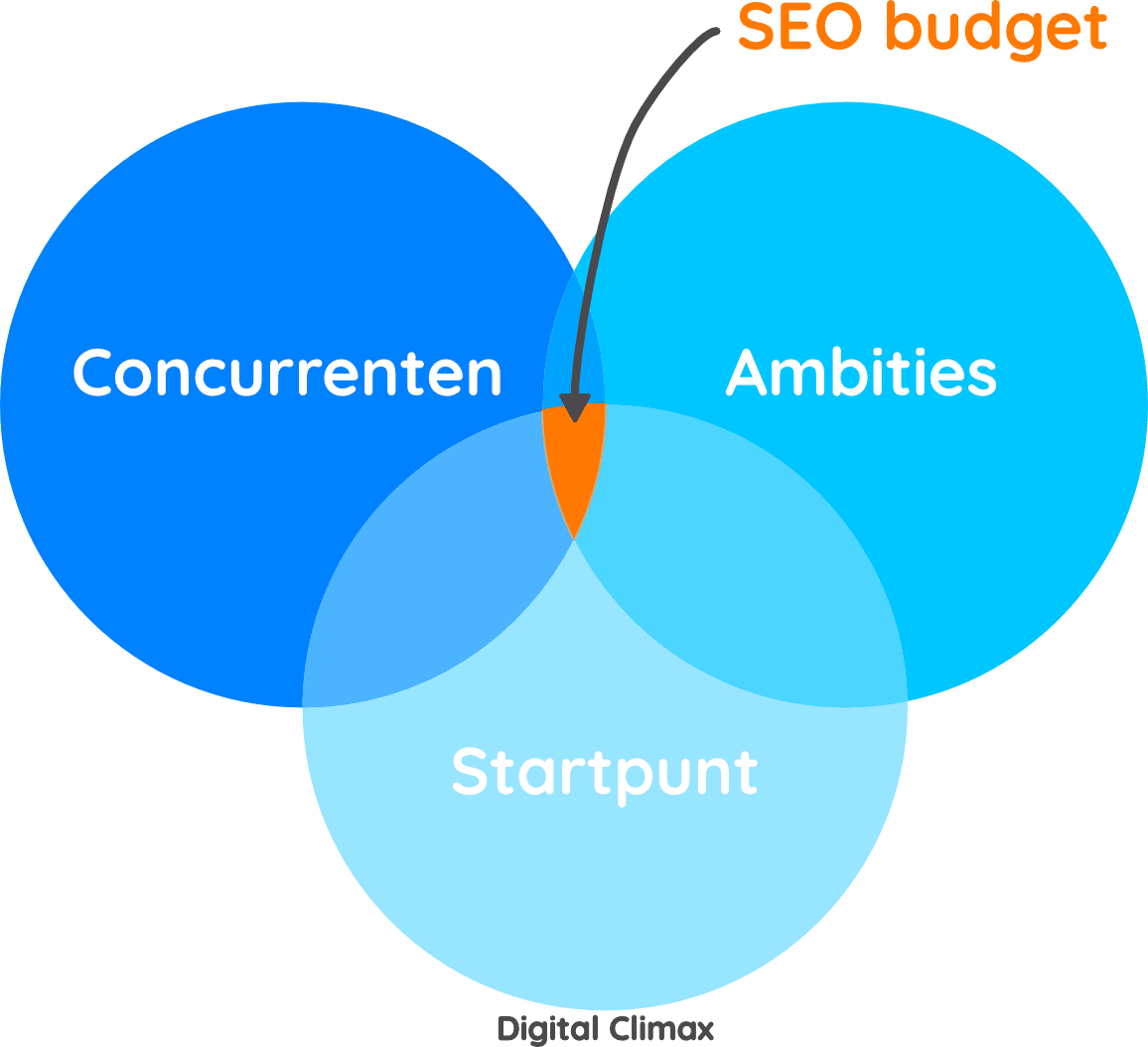
Important factors for determining your SEO budget:

  • Ambitions & goals
  • Starting point
  • Competition

The most important thing is that you choose a viable solution that helps you move forward.

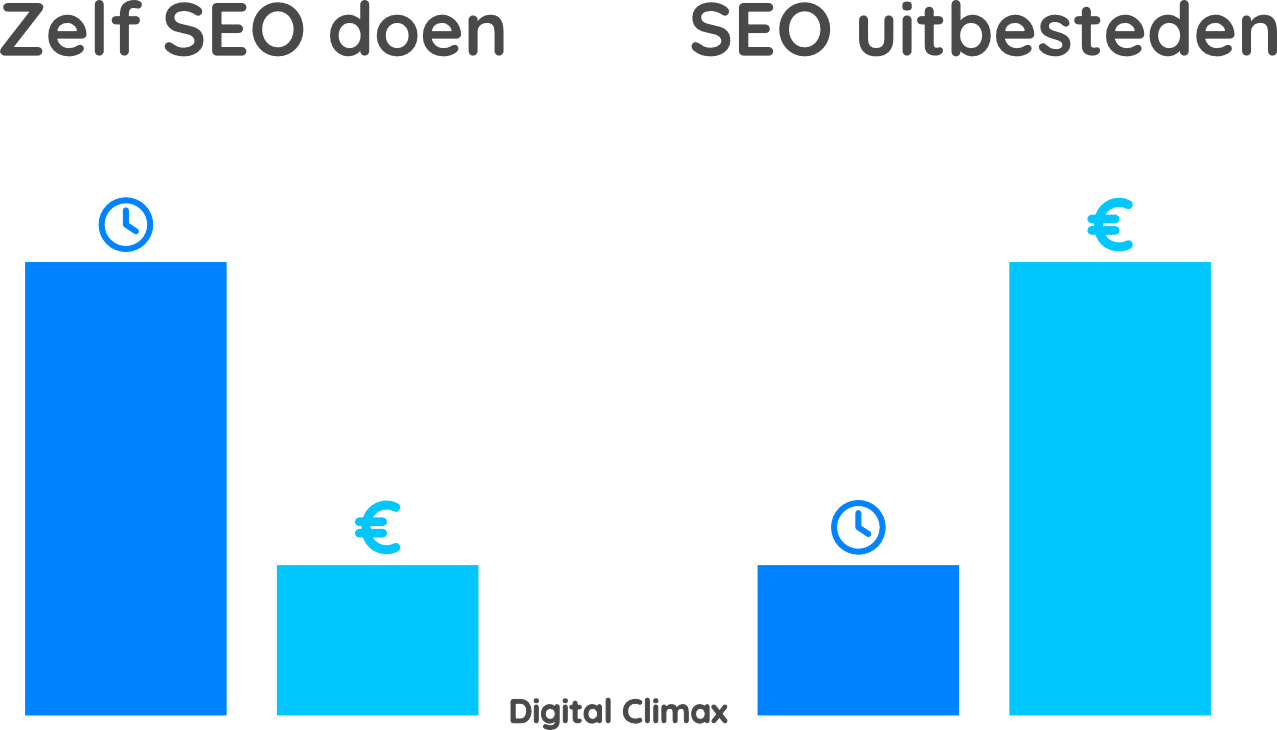
Also think about your own time investment. What will you do yourself and what will you outsource? For example, training will be cheaper than a full project.

SEO budget: how much does SEO cost?
Do SEO yourself

Can you do SEO yourself?

Yes, you can perfectly get started with SEO yourself. Read a book, look up information, watch videos, follow a course, … There is a lot of knowledge about SEO. Do know that learning & implementing SEO takes time. So know what you’re getting into and set aside time weekly to carry out optimizations.

An expert can save you a lot of time and headaches. That does require an investment. If you choose to outsource this, it’s best to take the time to find a high-quality partner. An irresponsible SEO can cause a lot of damage in the short and long term.

SEO success stories

Curious about the concrete results of SEO? In our SEO portfolio, you’ll find testimonials from some of our clients. Ranking number 1 for the competitive keyword ‘container pool’, a list of high positions for search terms around administration, or the result of a year focusing on impact protection: you’ll discover the stories behind the scenes here.

Digital Climax supports us to rank higher in Google. They think along with our SEO, suggest ideas, and adjust where necessary. Great collaboration with results.

David

Manager, Swim-Up Pools

Going up in the search results together

After reading this extensive article, you have everything you need to start your SEO yourself. This way you’ll achieve higher positions in the search results, more visitors, more leads, and more revenue. Would you still like to work with an SEO agency? Then we are your dream partner. Send us your details, and we’ll contact you as soon as possible.

SEO specialist Axl Van Steenacker

About the Author:

Axl Van Steenacker

Axl is an SEO expert through and through. He has been building and optimizing websites since 2018. With more than 7 years of experience, search engine optimization holds few secrets for him. Thanks to his background as a developer, he knows exactly how to start with SEO.

Since 2018, Axl and Digital Climax have already helped more than 120+ satisfied customers with their search engine optimization.

Together with the Digital Climax team, he focuses on growth in the search engines.

axl@digital-climax.be
014 83 29 60