
Translating a Website for SEO
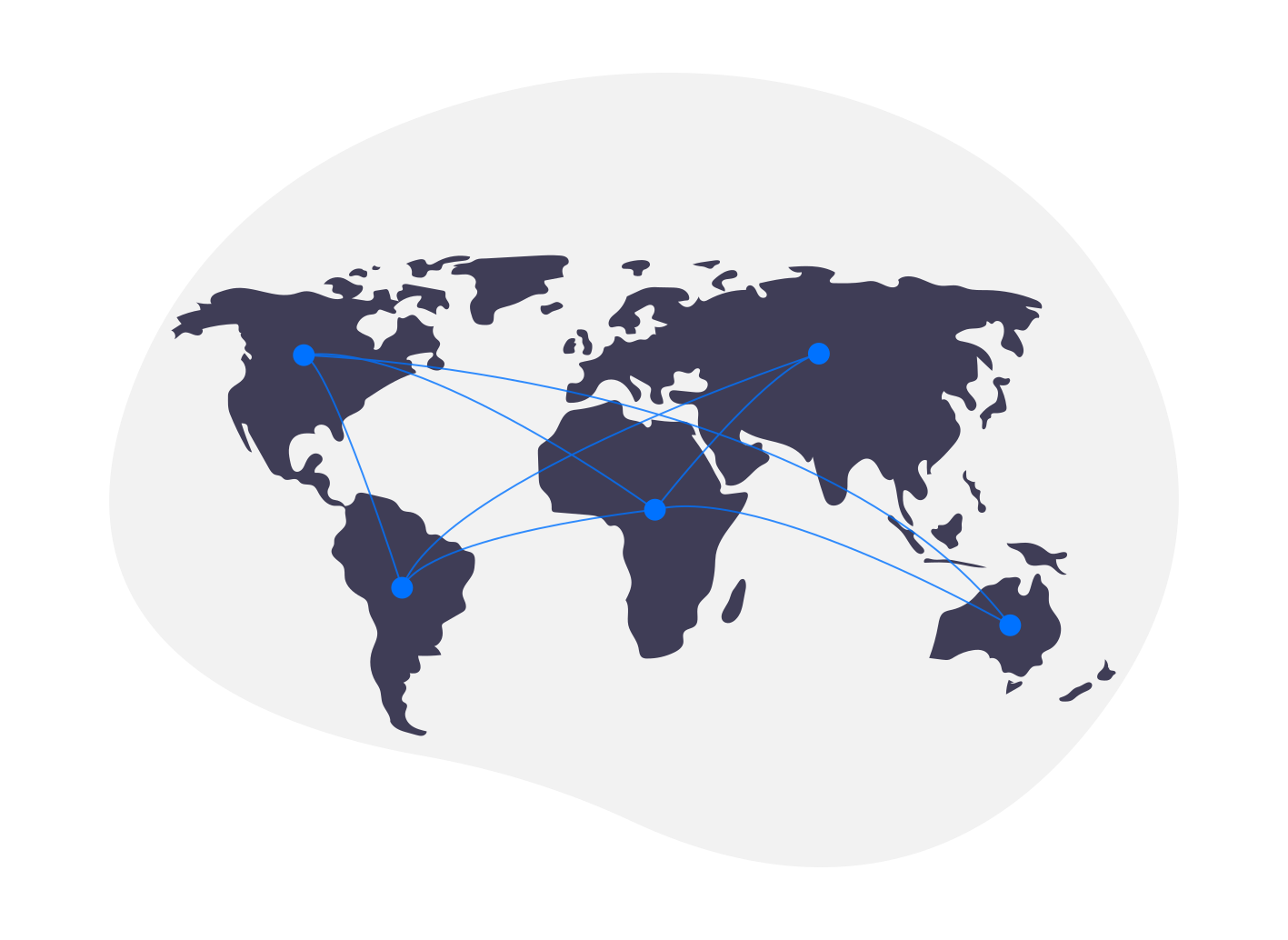
Expanding your target audience beyond national borders is a good strategy for further growing your business. Just as in your home country, your website is an essential element in this process. 90% of online users prefer to browse in their own language. This means you’ll need to translate your website in its entirety.
Unfortunately, it’s not just a matter of running your text through DeepL or Google Translate. You’ll need to strike a balance between the message of your original content, the needs of your new target audience, and search engine optimization (SEO). After all, a multilingual website is great, but getting visitors to your multilingual website is even better.
Translating a website to make it SEO-friendly is a job for specialists. Find out below what you need to keep in mind. Or outsource the project to a professional SEO agency.
Search Engine Optimization (SEO) is the process of improving your website. This enhances the user experience for your visitors and helps you rank higher in Google. Of course, you already knew that, because your original website meets all SEO requirements. It’s technically flawless, offers relevant, helpful content, and has established authority.
These three pillars remain important when you’re translating your website to make it SEO-friendly. That’s exactly why you should avoid a literal translation. Instead, take the time to revisit each step in the process. That way, you’ll strike the right balance between your message, your target audience, and your SEO. If you don’t adjust certain nuances, you’ll miss out on a significant amount of organic traffic in the long run. That means fewer visitors, fewer leads, less revenue, and a failed international venture.

When optimizing your website for SEO, you need to consider technical aspects, content, and authority. By now, you know your own market inside and out. But your international target audience still holds many secrets for you. For example, do they exhibit the same search behavior? Do they Google the same keywords with the same search intent? And is it just as easy—or just as difficult—to rank for those keywords as it is in your home country? Your SEO translation should address the answers to all these questions.
Please note: SEO translation is not the same as international SEO. With international SEO, you optimize your website for people in different countries, regions, and cultures. This does not automatically mean optimizing in different languages. Both Brazilians and Angolans speak Portuguese. Yet they have different cultures, different sensitivities, and different needs. With international SEO, you specifically cater to those differences.
Translating a website to make it SEO-friendly isn’t just a matter of clicking a button—it’s a process. It involves several steps.
1) Think it through carefully
An important lesson, not just for SEO but for life: think before you act. Does it really make sense to translate your website? International expansion for a company that installs bathrooms in customers’ homes is possible, but it requires more than just a multilingual website. Is your online goal to entice visitors to make an in-person visit to your only store? If so, you don’t need to target people on the other side of the world.
2) Keyword research
For your original website, you went to great lengths to rank as high as possible in search results. You laid a solid technical foundation for your website, published content relevant to your customers and search engines, and built authority through internal links and backlinks. It would be a shame if those efforts were lost in translation.
So take a step back for a moment. Your technical SEO is still the foundation; you’ll find additional tips below. The next pillar is content, which is largely built on keywords. So conduct a new keyword research.
Tips
- Start with your existing keywords, translate them, and enter them into Google Search Console or Ahrefs. Use translated keywords that you’ve already come across yourself. Or look for them in the tools or among your competitors.
- A good keyword is relevant to your target audience, has search volume, and is achievable to rank for (the competition can be beaten). Weigh the numbers against each other and look for alternatives if a keyword doesn’t score high enough.
- Don’t forget to set your geolocation correctly while conducting your research. The same search query in the same language yields different results in different locations. A Canadian, a French person, and a Congolese person speak the same language, but they search for different things.
Example
A French company wants to offer diets in the Benelux. As far as language is concerned, they have less work to do in Wallonia. For Flanders and the Netherlands, they’re using an online translation tool. As a result, they’re currently doing well with a blog post about “perdre du poids.” That makes sense—on average, 15,000 French people search for that term every month.
The online tool translates the keyword literally as “lose weight.” But that only gets 600 clicks per month—pretty “meager” 😉 If the company had consulted an SEO translator, they would likely have suggested “losing weight” as a new keyword, with as much as four times the potential reach.
3) Translate (or even rewrite)
Once you have the right keywords, the next step is to translate your website. Just like with SEO, you have two options: you can do it yourself, investing relatively little money but a lot of time, or you can outsource it to a professional, such as a certified translation agency.
A popular option for DIYers is to use online translation tools. Use their translations as a starting point, but be sure to review them yourself. These tools are getting smarter and better all the time, but they still have their shortcomings. Take idioms, for example. To us, a foreign language sounds like Chinese; the English say, “That’s Greek to me,” and Spaniards say, “Me suena a ruso”—“it sounds like Russian.” With a literal translation from a tool, you’ll give yourself away to your target audience.
Does your company have high brand recognition in multiple languages, and do you use your website solely as an online business card? If so, a literal translation is sufficient. In many other cases, however, you’re better off focusing on a translation that’s tailored to your target audience and search engines. That way, you’ll grow organically and naturally attract more visitors, more leads, and higher revenue.

Of course, the accuracy of your translation is important. But to make sure your website is SEO-friendly, you should also keep the following points in mind.
Consider a different domain name
Will you go with “www.peeters-consulting.be/fr,” “fr.peeters-consulting.be,” or “www.peeters-conseil.fr”? From an SEO perspective, we always recommend the first option with subfolders. This is because Google treats subdomains like “fr.peeters-consulting.be” exactly the same as “www.peeters-conceil.fr”: a new domain that still has to prove itself. Therefore, it’s better to continue building on “www.peeters-consulting.be.”
That doesn’t mean a new domain is always a bad idea. For example, French-speaking customers are likely to feel more drawn to “bieredici.fr” than to “biervanhier.be/fr.” For Johnson Gocarts, an American company expanding into China, a new domain is also a good solution. The target audience is so different that it’s worth the effort to build content and authority from scratch.
What’s more, Johnson Gocarts won’t have to worry about switching between languages or redirecting visitors to the correct website. American visitors go to “www.johnson-gocarts.com,” and Chinese visitors go to “www.johnson-gocarts.cn.” Simple. The catch is that the company must have sufficient resources and staff to run two websites.
Tip
What’s the difference between brand names, domains, and subdomains? You’ll find out that—and much more—in our domain guide.
Don’t just translate your content
Homepage, product pages, blogs, terms and conditions, contact form… Translating a website is quite a task. So don’t forget the details, such as menus, contact buttons, and headers and footers. Only when everything is in the right language will your visitors feel at home.
Don’t forget about the “invisible” SEO translations. There’s no point in searching for new keywords and adapting your content for them if you don’t then incorporate them into your page title and meta description. And of course, it’s easier to simply copy your files from your existing website to your translated one. But to translate your website in an SEO-friendly way, make sure to give all images a translated title and a translated alt description.
Tip
To find out why you should put so much effort into your images, check out our guide to image SEO.
Take a look in your root directory
If everything went well, your robots.txt and your sitemap. For a multilingual website, these will of course need to be updated with the new URLs. And in your robots.txt, be sure to check the search engines. Google accounts for 84% of search queries worldwide. That doesn’t mean you should neglect the other 16%. For example, Baidu is a major player in China and Yandex in Russia. It’s best not to exclude them if you want to tap into those markets.
Use hreflang tags
After the noindex tag, nofollow tag, and canonical tag, we’re adding another tag to our arsenal. Hreflang tags tell search engines which country and language your web page is intended for. This way, you let Google know which page it should show to which visitor. Is someone using an English search term, browsing from an English-speaking country, or has they set Chrome to English? With the correct hreflang, they’ll automatically be directed to the English version of your website.
Hreflang tags also ensure that Google does not treat web pages with nearly identical content for different regions as duplicate content . Consider, for example, a promotion on all your products in black, yellow, and red on July 21—you’d rather not show that to your Dutch customers, even though your product pages are otherwise exactly the same. An American company whose delivery times in the United States differ from those in Canada also benefits from hreflangs.
Examples
<link rel="alternate" hreflang="nl-BE" href="https://www.voorbeeld.be">
This hreflang tag tells search engines that this Dutch-language page is intended for Belgian readers (specifically, mainly Flemish readers).
<link rel="alternate" hreflang="nl-NL" href="https://www.voorbeeld.be/nl/">
You should add this hreflang tag to Dutch-language pages for your Dutch customers.
<link rel="alternate" hreflang="fr-BE" href="https://www.voorbeeld.be/fr/">
You should then place this tag on French-language pages for Belgian visitors (mostly Walloons). In the meantime, you’ll be able to fill in the hreflang tag for French-language pages targeting French customers without any issues.
Help your visitors
You’ve created subfolders for each language, translated your content with a focus on the right keywords, and added hreflang tags. Maybe you’ve even translated your website into three, four, or more languages. Make sure visitors can easily switch between the different language versions. Include a navigation portal on your main homepage and language buttons on every page. After all, user-friendliness is universal and important for both your new target audience and search engines.
A translation can make or break your business. There are plenty of examples from the past to prove it. For instance, in the 1950s, fountain pen manufacturer Parker introduced a new type of ink to the market. This SuperQuink was less likely to leak in a pants pocket or a shirt pocket. The fitting slogan was, “To avoid embarrassment, buy Parker SuperQuink.”
Parker is so convinced of the product that they’re also launching it in Latin America. Of course, this means the target audience must be addressed in their native language. But Spanish speakers suddenly discover an added benefit of SuperQuink. The new slogan is, “To prevent pregnancy, buy Parker SuperQuink.” “Embarrassment” and “embarazo” may sound alike, but they mean something completely different.
Translation can be a tricky business. Car brands, in particular, seem to struggle with their expansion into foreign-language markets. For example, General Motors’ Chevy Nova (“no va” means “doesn’t run” in Spanish), the Ford Pinto (“pinto” means “small genitals” in Brazilian Portuguese), and the Mazda Laputa (“la puta” is Spanish for “the whore”) would have sold even better with a different name.
Admittedly, services like DeepL and Google Translate have made great strides in recent years. Still, it’s best to take those automatic translations with a grain of salt. Do you need it to be accurate? Then always consult a professional.
Are you planning to have a website or an online store built and want to reach people in more than one language? Or are you planning to translate your current website to expand your target audience? In either case, it’s a good idea to also consider your project from an SEO perspective.
The impact of translating SEO is, in fact, the same as that of SEO in a single language. By avoiding technical SEO issues, focusing on helpful content, and building authority, you’ll attract more organic visitors in the long run. That means more opportunities to convert people into leads and customers—and, consequently, higher revenue.
Ready for your SEO translation adventure? Safe travels, buddy! If you run into any obstacles along the way, don’t hesitate to contact us.
Table of Contents: Translating a Website for SEO
- What is SEO?
- What is SEO translation?
- How does SEO translation work?
- What should you keep in mind when translating for SEO?
- Consider a different domain name
- Don’t just translate your content
- Take a look in your root directory
- Use hreflang tags
- Help your visitors
- A Few Translation Camels
- What is the impact of SEO translations?