
What is SGE? (Search Generative Experience)
What is SGE?
SGE stands for Search Generative Experience. It is Google’s latest addition. With this feature, the tech giant is incorporating artificial intelligence into its search engine. SGE was launched at Google I/O 2023 and is currently available to beta testers.
After Bing previously integrated ChatGPT into its search engine, Google is now rolling out SGE. With this move, they are responding to the emerging AI competition.
What is the impact of SGE on SEO?
SEO is constantly evolving, and in recent months, the pace of change has been faster than ever. The rise of AI has, for the first time, presented Google with a formidable rival. The way we search for information is changing dramatically.
So the way you do SEO will also change. Right now, this is still in its early stages, and the AI search engine is only available in English. After the first successful tests, we expect Google to roll this out globally soon.
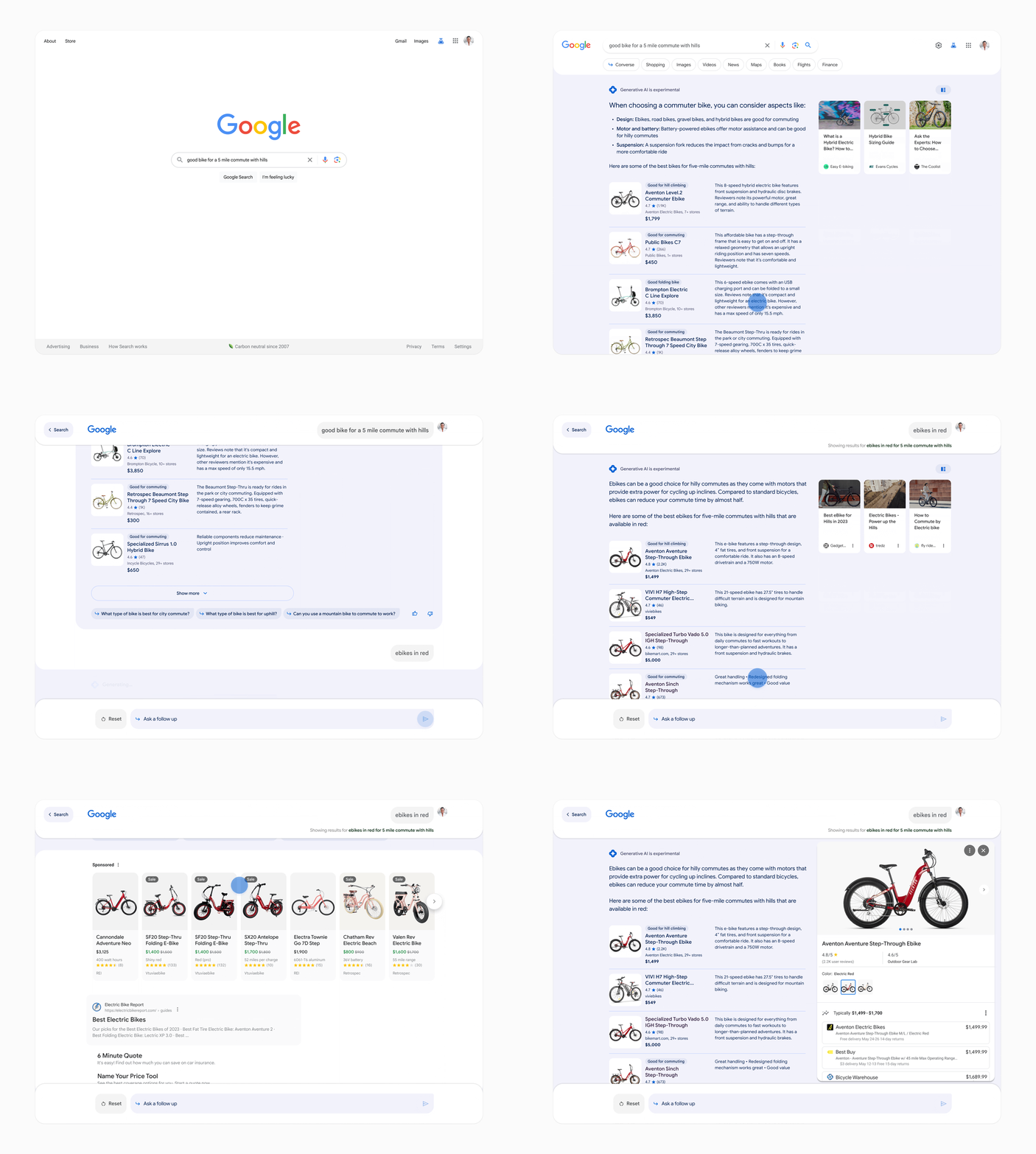
You’ll mainly notice the impact of SGE with slightly longer search queries. When people ask questions, AI can now provide a complete answer.
In that response, we note the following:
- Sources are displayed, so you’ll be able to receive traffic
- You can ask a follow-up question
- Online shopping is set to evolve dramatically
How can SGE help you?
Google is a big fan of its new product—that much is clear. SGE makes searching easier. If you can’t find a good answer today, you have to refine your search. Sometimes you even have to do it several times. SGE aims to solve that problem.
1) Clarify complex topics
You know how it is—a new topic you know nothing about (like Search Generative Experience 😉). That’s exactly what Artificial Intelligence will soon help you figure out. It will also suggest various sources for you to fact-check.

2) Answering very specific questions
Long-tail keywords are a thing; we use search engines differently than we did when they first came out (and that’s another reason why we believe in AI). These days, we ask Google complete questions. That will make things even easier.
In addition, SGE allows you to add extra details. Consider, for example, “What sunscreen should I use?” With SGE, that can suddenly become “which sunscreen should I use?” or even “which sunscreen should I use, taking today’s weather into account?”
Easy, right?
3) Shopping online is a lot easier
Take the same example: “What sunscreen should I use today?” You’ll immediately be able to see the right types of sunscreen, including products you can buy. E-commerce SEO is therefore set to undergo a massive and rapid transformation.
Still not satisfied with your answer? Then just ask a follow-up question explaining that you need sunscreen for the beach, that it shouldn’t feel sticky, and that you want to tan quickly.
Whereas you used to have to filter the results yourself and sift through the new search results, you now get a follow-up response with suggestions.
Optimizing for the New SGE
Optimization for SGE is currently still based on SEO principles. The technology is still very new, so no comprehensive studies or tests have been conducted yet. As soon as they become available, we’ll list them here.
Here’s a preview of what we expect:
Add more nuance to your writing
Your content will need to be more nuanced. Your visitors may now be looking for very specific scenarios. Those scenarios will be so broad that your content really needs to be spot-on and cover a variety of topics.
Helpful content, albeit with a higher level of detail.
One question we ask ourselves here is: Will content clusters become even more important, or will they fade into the background?
Make it more personal
How far will AI go to personalize your results? Does Google perhaps know your favorite color, and will you therefore receive even more personalized results? Here, too, there may be a whole host of additional variables to consider.
How can you test SGE?
Google’s new AI search feature is still in the testing phase. To test SGE, sign up for the beta tester waitlist. This is only available in the U.S. (though you can get around this with a VPN). You’ll receive an email when you can start testing the new SGE.

SGE vs. SEO: What Are the Differences and Similarities?
SGE is the experience within Google’s search engine. SEO is the art of optimizing your website to rank highly. With SEO, you’ll also be able to optimize for the new generative experience.
So these are two abbreviations that mean completely different things. Although they are closely related, we cannot list any differences between them.
Essentially, SGE is part of SEO
SGE vs. Bard
Google Bard is the direct counterpart to ChatGPT. It’s a chatbot that uses AI to generate answers. You interact within a chat environment and can ask questions and follow-up questions. SGE ensures that AI is integrated into the search results. So you don’t have to go to a separate application to ask questions. You get AI-generated answers directly in the search engine.
Preparing Your Business for SGE
SGE is new, even to specialists. Belgium does not yet have official access to the new SGE results. So we’ll have to wait and see which keywords will actually be processed by SGE.
By that, we mean that they will provide AI-powered answers. This could cause you to lose traffic to your website. That’s because Google already provides all the answers right within the search engine. As a result, searchers will be less likely to click through to your site.
For now, it’s best to keep focusing on the basics of SEO:
- Make sure your website is technically sound
- Write content for your visitors and provide added value
- Build Your Online Authority Through Linkbuilding
- The common thread here: a focus on quality
Curious about AIO, or AI optimization? Contact Digital Climax. We’d be happy to help you.